Student Success
Charles R. Drew University Inducts 60 New Medical Students in White Coat Ceremony
Sixty aspiring doctors received their white coats at Charles R. Drew University, bringing total enrollment in the historic four-year medical program to 240 students.
Published August 22, 2026 · HealthHBCU Newsroom
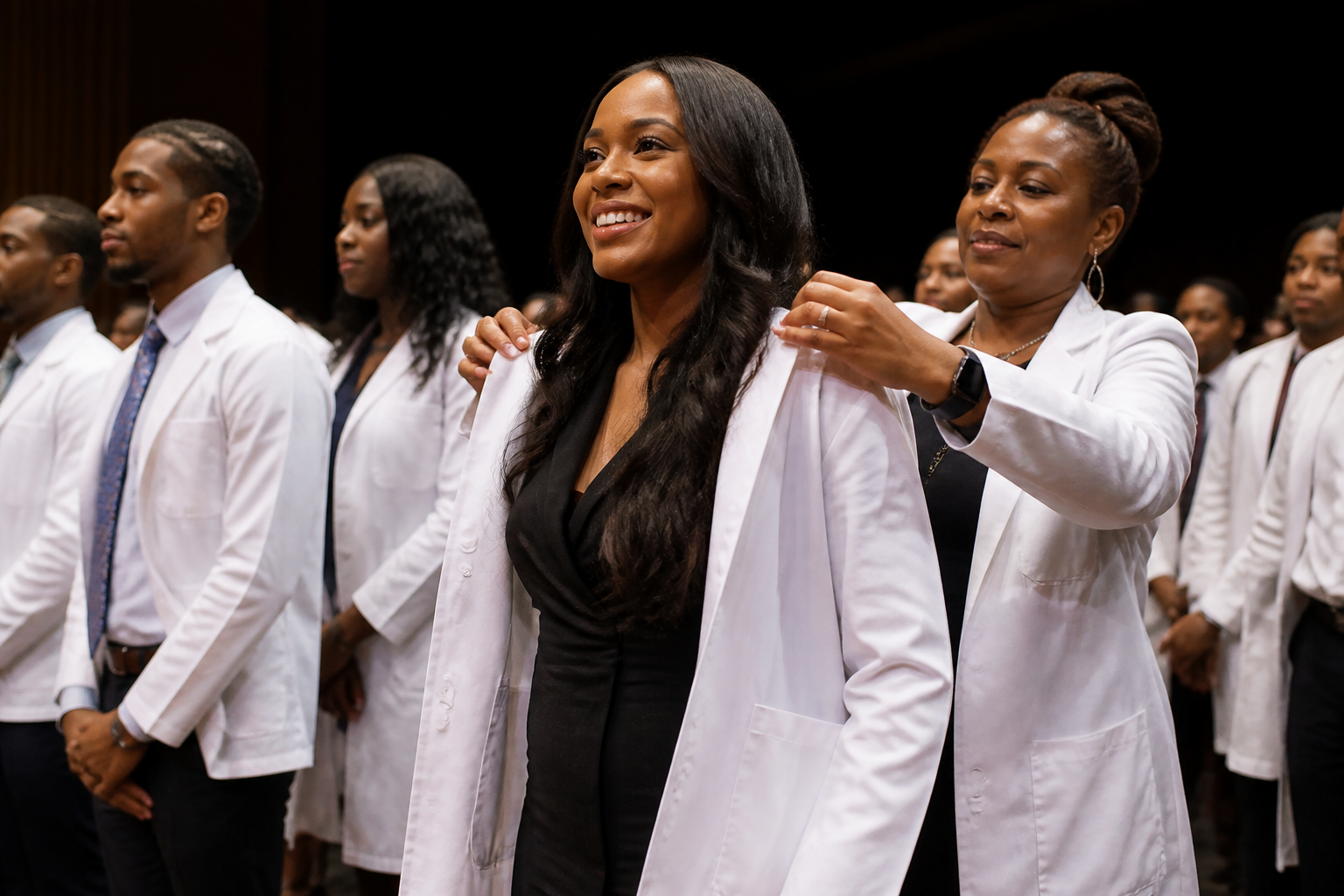
Sixty future physicians recently stepped into their professional journey as Charles R. Drew University of Medicine and Science welcomed its newest medical school cohort. The institution marked the occasion with its traditional white coat ceremony, celebrating the fourth group of students to enter its independent, four-year Doctor of Medicine program.
With this incoming class, total enrollment in the university's flagship medical degree program reaches 240 students. The ceremony serves as a crucial rite of passage, signaling the transition from undergraduate study to the rigorous clinical and ethical demands of medical education.
Expanding the Pipeline for Diverse Physicians
The growth of CDU’s medical program comes at a pivotal moment for American healthcare. Black physicians remain significantly underrepresented in medicine, comprising less than six percent of practicing doctors nationwide despite Black Americans making up over 13 percent of the population.
Historically Black institutions and minority-serving health centers like CDU play an indispensable role in closing this gap. By training physicians who often share the cultural backgrounds of the patients they serve, these programs directly address long-standing health disparities. Studies consistently show that racial concordance between patients and providers leads to improved communication, greater trust, and better overall health outcomes in Black communities.
A Legacy of Health Equity and Service
Located in South Los Angeles, Charles R. Drew University was founded in the wake of the 1965 Watts Uprising to address the severe lack of healthcare access in underserved neighborhoods. That foundational commitment to health equity remains the cornerstone of its curriculum today.
The medical students joining this four-year program are trained to look beyond acute clinical symptoms to understand the broader social determinants of health, including housing stability, food security, and environmental safety. As these 60 future doctors begin their studies, they carry forward a mission designed to bring compassionate, high-quality care to historically marginalized populations.