Black Health
Telehealth Navigator Program Boosts Blood Pressure Control for Black Patients at Community Health Centers
A community-based telehealth navigation initiative at health centers successfully boosted blood pressure management among Black patients, highlighting the power of personalized digital care support.
Published August 22, 2026 · HealthHBCU Newsroom
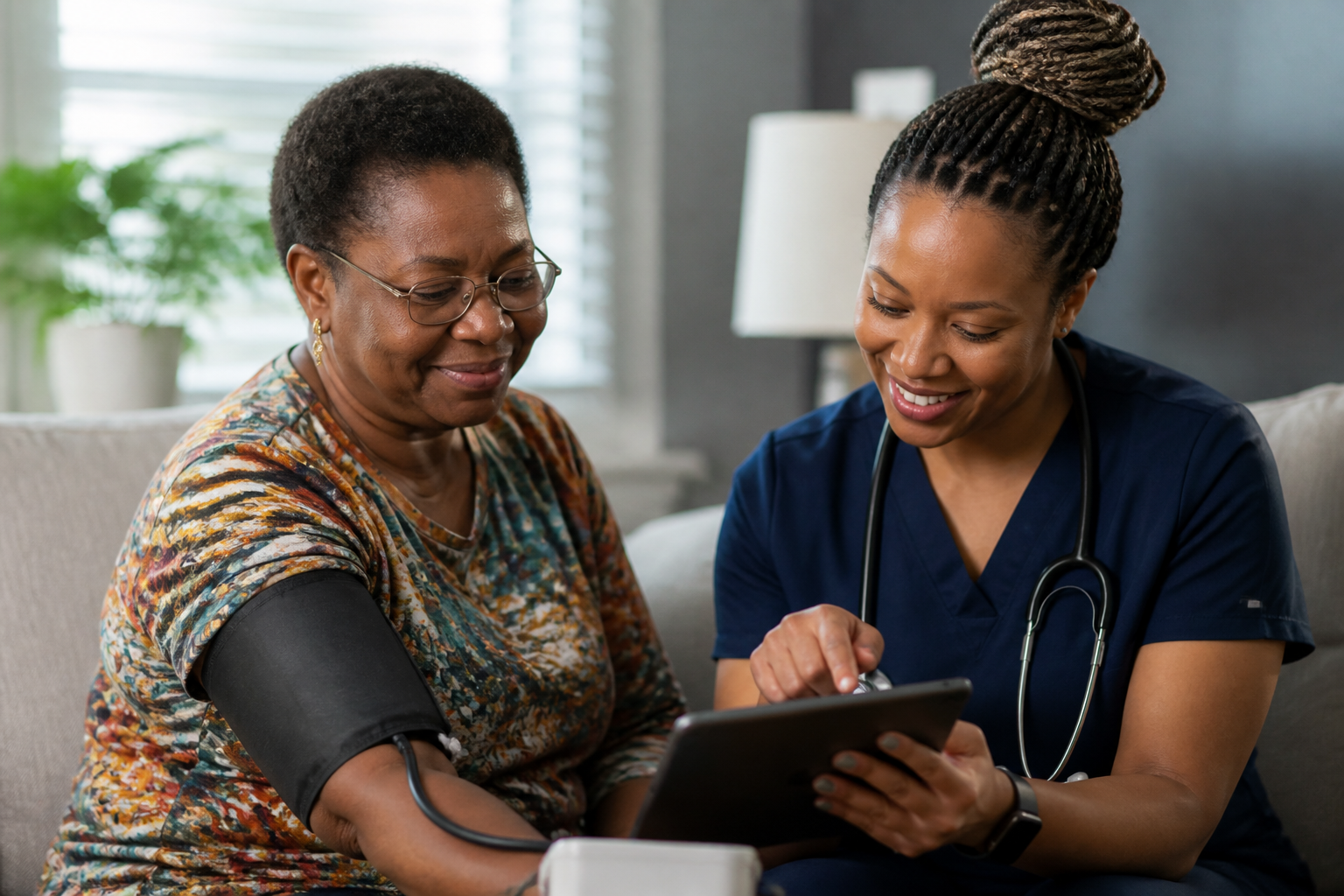
A recent initiative focused on community-based care demonstrates that combining technology with personalized guidance can lead to measurable improvements in cardiovascular outcomes for Black patients. By introducing dedicated telehealth navigators at federally qualified health centers, researchers found a significant enhancement in blood pressure management among a demographic that historically faces severe disparities in heart health.
Hypertension remains one of the most pressing health challenges facing Black Americans, serving as a primary driver of heart disease, stroke, and kidney failure. While digital health tools and remote monitoring offer new avenues for chronic disease management, barriers such as digital literacy gaps, mistrust in the medical system, and limited broadband access often prevent patients from fully benefiting from these innovations.
Bridging the Digital Health Divide
The telehealth navigator model directly addresses these structural obstacles by pairing patients with trained support staff who assist them in using remote technology. Navigators help individuals set up monitoring equipment, navigate patient portals, and troubleshoot technical issues, ensuring that digital health tools become accessible rather than burdensome.
By embedding these navigators within federally qualified health centers—facilities that predominantly serve underresourced urban and rural communities—the intervention meets patients in familiar environments. The personalized attention helps build trust, encourages consistent self-monitoring, and fosters clearer communication between patients and their primary care physicians.
Supporting Community-Based Cardiovascular Care
The positive outcomes from the program underscore the critical importance of culturally competent care and tailored support systems in primary medicine. When health interventions account for the social determinants of health and provide hands-on assistance, patients are better equipped to maintain consistent medication schedules, track vital signs, and make necessary lifestyle adjustments.
Improving blood pressure control at the community health level is vital for reducing premature mortality and chronic disease burdens in Black neighborhoods. Programs that combine innovative monitoring tools with human-centered navigation serve as a vital blueprint for future public health strategies aimed at eliminating systemic health inequities.
Strengthening the Primary Care Pipeline
The success of navigator-assisted telehealth initiatives highlights a broader necessity within the healthcare ecosystem: expanding and diversifying the clinical workforce. Black healthcare professionals, culturally responsive navigators, and community health workers play an indispensable role in closing care gaps, improving patient satisfaction, and delivering effective preventative care.
As health systems continue to integrate virtual tools into routine management, investing in workforce pipelines that train Black clinicians and health advocates will be essential. Historically Black Colleges and Universities remain at the forefront of preparing the next generation of physicians, nurses, and public health specialists who understand the unique needs of underserved populations. Ensuring that these future leaders are equipped to champion community-centered, tech-enabled care models will be key to sustaining long-term improvements in Black cardiovascular health.