Diabetes
AI Screening Tools Help Close Disparity Gap in Diabetic Vision Loss for Black Adults
Integrating automated artificial intelligence screening into primary care clinics significantly increases early detection of diabetic retinopathy among Black patients.
Published August 8, 2026 · HealthHBCU Newsroom
In the United States, diabetic retinopathy remains a leading cause of vision impairment and blindness among working-age adults, with Black Americans facing disproportionately higher risks of developing severe complications from diabetes. Despite the critical need for routine screenings, systemic barriers—including limited access to specialized care, economic constraints, and a shortage of eye care professionals in underserved communities—frequently delay diagnosis and treatment.
A recent study highlighted by Johns Hopkins Medicine demonstrates that integrating artificial intelligence into primary care settings can significantly bridge these diagnostic gaps. By bringing automated screening technology directly into community-based health centers, researchers found a dramatic improvement in annual eye exam completion rates among African American adults living with diabetes.
AI Integration in Primary Care Settings
Traditional protocols require patients with diabetes to schedule separate appointments with ophthalmologists or optometrists for dilated eye exams. For many individuals navigating transportation hurdles, hourly job constraints, or local shortages of specialists, these follow-up visits often fall through the cracks.
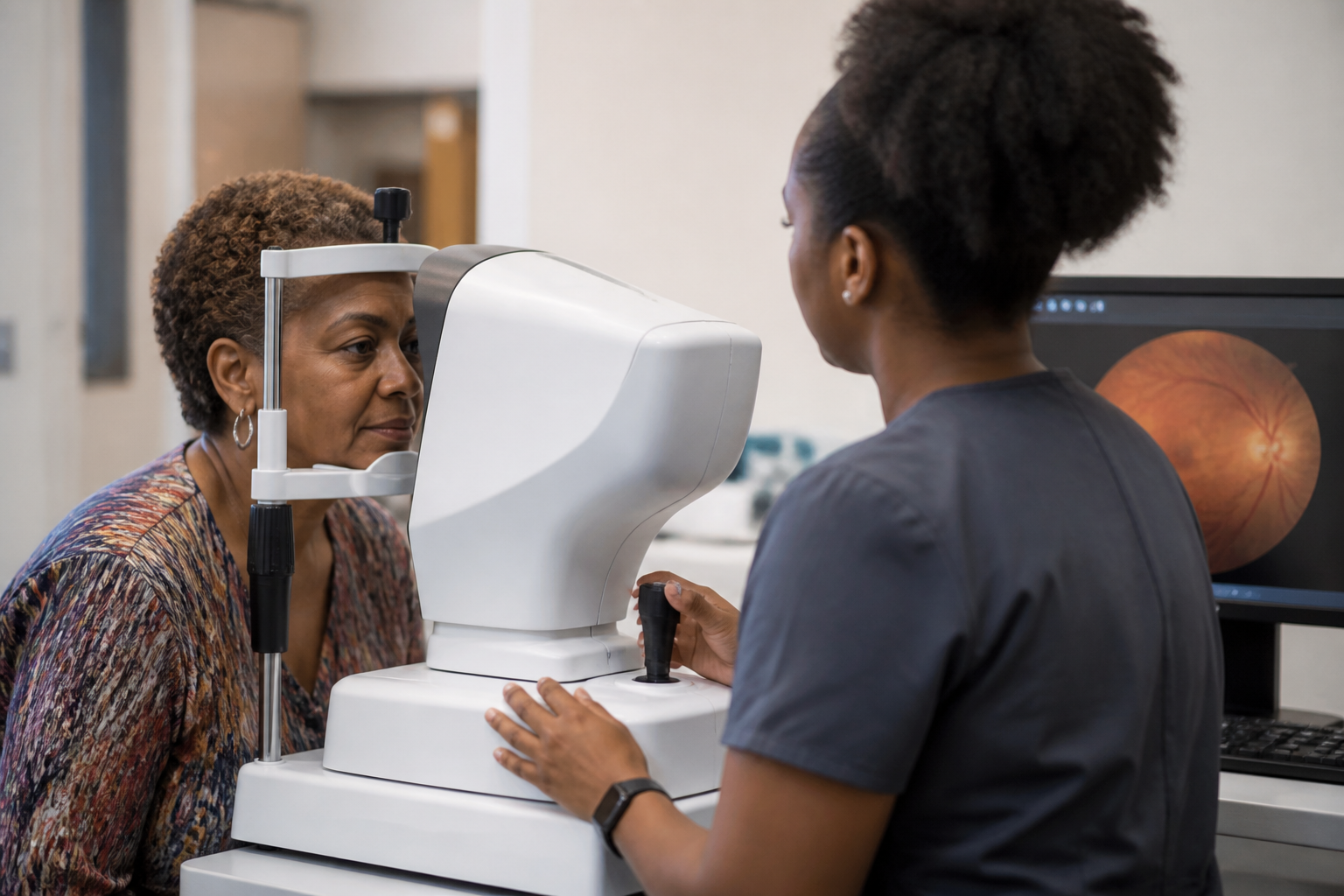
The study evaluated the implementation of an AI-assisted camera system operated by medical staff during routine primary care visits. The technology captures high-resolution images of the retina and utilizes advanced algorithms to detect signs of diabetic retinopathy within minutes. This real-time analysis allows physicians to immediately inform patients of their results and expedite referrals for those requiring specialized medical intervention, effectively removing the logistical friction of multi-step appointments.
Impact on Health Equity and Early Detection
The findings demonstrate a meaningful reduction in long-standing healthcare disparities. When screening tools were made readily accessible in local clinics, participation rates among Black patients increased substantially, matching or exceeding historical baseline screening levels observed in higher-resourced demographics. Early detection is particularly crucial for diabetic eye disease, as early-stage microvascular damage can often be managed or stabilized before irreversible vision loss occurs.
Health equity advocates emphasize that technology alone is not a silver bullet, but rather a vital mechanism to expand clinical capacity. By deploying non-invasive diagnostic tools into primary care networks, public health infrastructure can better protect vulnerable populations from preventable disability.
The Role of Diversified Healthcare Delivery
The success of primary care-integrated screening underscores a broader imperative within the medical system: the need for culturally competent, community-anchored care models. Historically Black Colleges and Universities (HBCUs) have long been at the forefront of training physicians, researchers, and public health practitioners who understand the nuanced social determinants influencing patient care in marginalized communities.
As diagnostic innovations like AI screening gain broader adoption, workforce development at HBCU medical schools and allied health programs will remain essential. Ensuring that diverse healthcare providers are equipped to lead, evaluate, and implement emerging clinical technologies will be key to ensuring these advance equity rather than exacerbating existing divides. Closing the gap in diabetic eye care requires both cutting-edge tools and a trusted healthcare workforce dedicated to improving outcomes for Black patients nationwide.